
Pentagon rolls out major reforms of R&D, AI
Defense Secretary Pete Hegseth consolidates tech offices under Pentagon CTO Emil Michael, launches new AI initiatives from swarms to sims to GenAI, and breaks up the sprawling Advana database.
Defense Secretary Pete Hegseth consolidates tech offices under Pentagon CTO Emil Michael, launches new AI initiatives from swarms to sims to GenAI, and breaks up the sprawling Advana database.

If Obviant’s prototype succeeds, the contract allows for expanding its use across the armed services and joint Combatant Commands — potentially complementing or competing with the Pentagon’s own Advana analytics.
Leaders discuss progress toward Target Level on Aug. 26 at 2pm ET. CPE credit eligible.

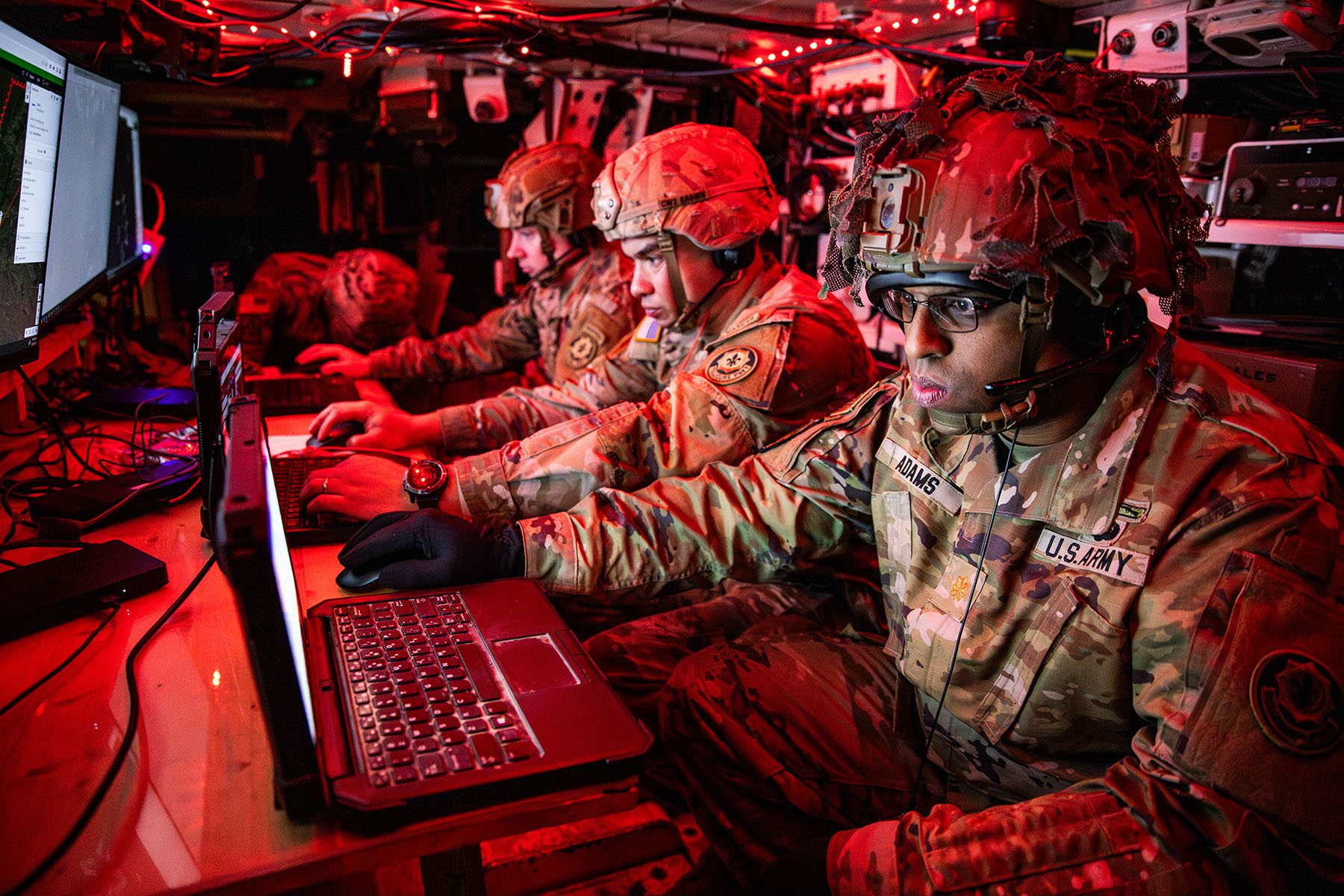
Advana is an example – a mission-aligned data platform that integrates commercial innovation and defense-grade engineering.

Having grown to 100,000 users worldwide, the Pentagon’s favorite big-data analytics system now needs the legal authorities and budgetary stability of a formal Program Of Record, officials told Breaking Defense in an exclusive interview.

“China's outproducing us in ships, munitions and other systems,” Peter Modigliani, one of the authors of the report said. “So that's where software is going to be the differentiator.

The memo was signed on March 13 by Steven Morani, the acting assistant secretary of defense for sustainment.


Truly autonomous aircraft can make decisions without continuous human input.

As her signature “Open DAGIR” initiative seeks to bring in smaller, innovative software firms, “we’ve got to be a lot more explicit” in contracting language to protect their intellectual property and data rights, said Chief Digital & AI Officer Radha Plumb.

“You don’t have to do everything,” said Bonnie Evangelista, deputy chief digital & AI officer for acquisition. “If you do a single piece and you do it really well, you can have a contract.”
Elaine McCusker of AEI in this op-ed discusses how the Combatant Commands are using Advana to their advantage.

With Advana, "we’re kind of victims of our own success,” a senior defense official told Breaking Defense in an exclusive interview, meaning changes have to be made to "get to sufficient scale."

Lightning Surge exercises are turning soldier feedback on NGC2 into operational software changes in days, not years.